Home » Blog » Your CPA Firm Is One Service Away From Irrelevance
Your CPA Firm Is One Service Away From Irrelevance
Posted On: March 17, 2026
By: Todd Villarrubia
Todd M. Villarrubia, an authority in wealth planning and preservation, brings over 30 years of in-depth, experience to the complex challenges of safeguarding familial and individual wealth. Based in New Orleans, Louisiana, his expertise is not only recognized in the local community but also reverberates within the legal industry.
Many CPA firms lose high-income clients not because of poor tax work, but because they offer only compliance. Learn how CPA firms are expanding services without hiring or risking client relationships.
For decades, CPA firms have built successful practices around compliance, tax preparation, filings, and financial reporting. That model worked when clients viewed their CPA as a specialist who handled one piece of a much larger financial picture.
Today, that expectation has changed.
High-income clients no longer want a collection of disconnected advisors. They want a single, trusted firm that can coordinate tax strategy, estate planning, asset protection, and long-term wealth decisions. And when their CPA can’t offer that, they don’t necessarily complain; they quietly look elsewhere. That’s how good clients disappear.
Why “Just Being a CPA” Is Becoming a Risk
Most CPA firms that lose high-value clients aren’t doing anything wrong. In fact, they’re often doing everything right:
Delivering accurate, timely tax work
Working long hours during peak seasons
Maintaining strong personal relationships with clients
The issue isn’t quality. It’s scope.
As clients accumulate wealth, their needs expand beyond compliance. They begin asking questions like:
“Should I be doing estate planning now?”
“Is my business structured properly for taxes and liability?”
“How do I protect what I’ve built?”
When those questions come up, and your firm doesn’t offer answers or has to send clients elsewhere, the relationship subtly changes.
The Hidden Cost of Referring Clients Out
Many CPA firms believe referring clients to outside professionals is the safest solution. On the surface, it feels responsible and client-focused.
In practice, it’s one of the fastest ways to lose relevance.
Here’s why:
The referred professional now has direct access to your client
That professional often offers overlapping or expanded services
The client starts seeing another firm as “more complete”
You may still handle taxes, but you’re no longer the central advisor. Over time, your role shrinks, fees come under pressure, and loyalty weakens.
Clients don’t leave all at once. They slowly stop needing you the way they used to.
Why Building In-House Services Usually Fails
Some firms recognize this risk and attempt to build new services internally, such as estate planning, asset protection, advanced tax strategy, or wealth coordination.
The problem is cost and complexity.
Building in-house requires:
Hiring specialized professionals
Training staff
Managing new compliance and liability risks
Waiting months (or years) to see ROI
All while your existing workload doesn’t slow down.
For most CPA firms, especially small to mid-sized practices, this approach creates more stress than growth.
The Alternative: Expanding Without Building
There is another option that avoids both extremes, a white-labeled partnership model.
Instead of building new departments or sending clients away, firms can access advanced services behind the scenes while maintaining full ownership of the client relationship.
This allows a CPA firm to:
Offer estate planning, asset protection, and advanced strategies
Appear as a one-stop advisory firm
Keep branding, communication, and trust intact
Avoid hiring or operational complexity
In effect, the firm positions itself like a family office, without actually building one.
A Real-World Example: From Overworked to One-Stop Advisor
Consider a solo CPA who was excellent at tax strategy and deeply trusted by his clients. Every year, however, he lost one or two of his best accounts, not due to mistakes, but because clients needed services he didn’t offer.
He was working 80-hour weeks just to maintain revenue.
By expanding his offerings through a white-labeled partnership, he was able to immediately provide advanced services under his own brand. Clients began calling him before making major financial decision, not just during tax season.
He didn’t hire staff.
He didn’t take on extra work.
He simply became more valuable.
Why This Model Protects and Grows CPA Firms
Firms that expand their services strategically gain several advantages:
Client retention: High-income clients stay longer
Recurring revenue: Advisory relationships extend beyond tax season
Pricing power: Firms justify higher fees through broader value
Positioning: Firms compete with much larger practices
Most importantly, the CPA remains the central advisor, not just the compliance provider.
The Bottom Line for CPA Firms
The future of CPA firms isn’t about working more hours or adding complexity. It’s about positioning. Firms that stay limited to compliance risk become interchangeable. Firms that expand thoughtfully become indispensable.
If your clients are asking bigger questions, and you don’t have a way to answer them, you’re closer to irrelevance than you think.
The good news is that evolving your firm doesn’t require building everything yourself. It requires choosing the right model.
Want to See How This Works Inside Real CPA Firms?
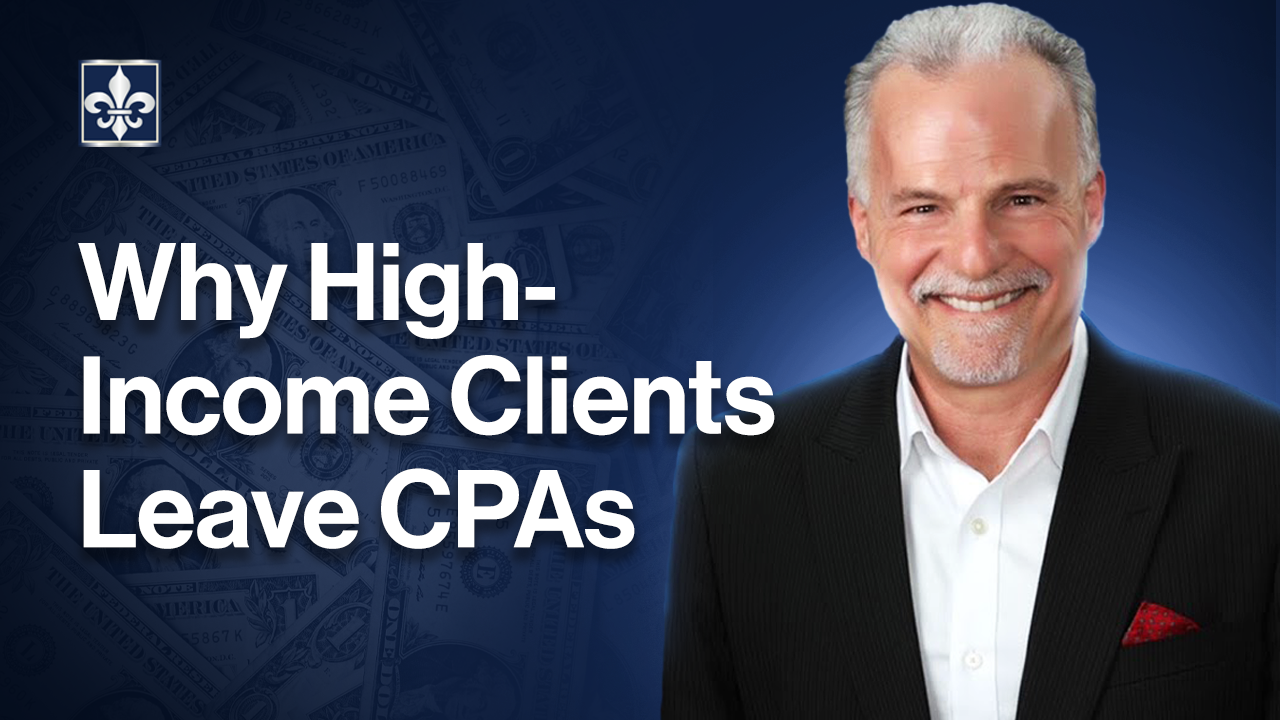
If you’d like to see how CPA firms are expanding services, retaining high-income clients, and building recurring revenue without hiring or disrupting relationships, explore the model explained in the video linked on this page.
Understanding your options today can protect your firm for years to come.